SEO in the Year of the Rabbit


Kung Hei Fat Choy!

The one thing that is common to blog posts predicting SEO for the next 12 months, is that they are mostly wrong.  They tend to be more of a wish list than a realistic forecast of the marke, and this is not particularly surprising: all SEO practitioners have their own way of doing things and their own list of techniques that get results. As a result, they look at the market in slightly different ways and see trends that others do not.

Our approach at Latitude is one of distributed responsibility where different members of the team take ownership of specific aspects of campaigns.  This means that they are able to specialise in particular areas of SEO while also getting access to a broad range of different SERPs.  It works pretty well.

So what do the team think?

There’s an old joke about asking 3 SEO people a question, and getting 6 different answers. So when I asked the team what 3 things they thought would be important in the next year, they responded with a pretty long list:

Some of what we do every day.

Thankfully, there were at least some common themes to what they said, so here’s the lucky number of 8 predictions about what we think will matter in SEO in the next 12 months:

Prediction 1: Connections to replace Links

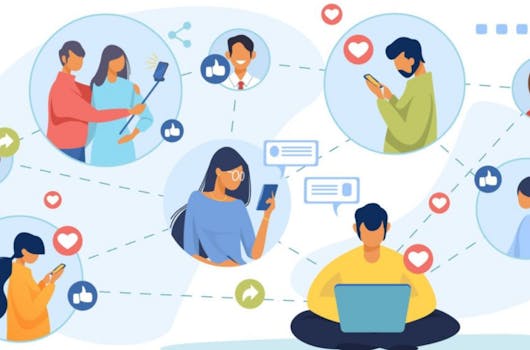
No one can have missed the change in the web over the last couple of years in terms of the way people share and find information.  The kind of link building that worked well in the past no longer will.  Search Engines face a real challenge to demonstrate relevance to a socially networked audience, and find ways of organising content based on social connections rather than old fashioned links.

I think we’ll see old school link building fall by the wayside in 2011 to be replaced by a harder to fake metric like the number of people who share content.

Prediction 2: Better Personalisation

Google already do a pretty good job of presenting me with things I’m interested in, but they’ve recently made some changes that indicate a more generalised approach.  You can now specify what kind of reading level you want via the Advanced Search option.

I think that we’ll see a subtle change where Google will present results that are tailored to the user based on passive preference about the type of website they engage with most.  Dumbing down for some, elevating the standard for others.

Prediction 3: Content Farms Get Slapped

The recent algo update was about nailing websites that republish content, and ensuring that the originators get the credit (and the traffic).  Content farms like Demand Media which churn out hundreds of thousands of pages of optimised content every month are likely to be treated separately.

I think that we’ll see Google apply a filter that identifies the number of new pages being produced on a domain per day as a spam metric, and apply a penalty to rankings when it crosses a threshold.

Prediction 4: New Types of Spam

Pretty much a given.  No matter how hard search engines try to push back the tide of spam in their index, there will always be methods of faking legitimacy.

I think that the biggest threat to the search engines will come from a combination of hacked social media accounts, and large bot nets which are programmed to behave like users.

Prediction 5: Google in the Dock

Again, pretty much a given.  Google are pushing it a bit at the moment in terms of anti-trust and monopolistic behaviour.  They’re already ~90% of search engine market share, and are also massively dominant in analytics, ad serving, display advertising, and email.

Breaking up a company takes years and costs millions of pounds in legal fees, but fining them for breaches of monopoly law can bring in hundreds of millions of pounds for cash strapped governments under pressure from big media companies…

Prediction 6: SEO Beyond Google

Google might have 90% of the search market, but web based search is no longer the only game in town for businesses.  I’ve talked a lot this year about apps having the potential to replace the browser for a lot of normal web functionality, and I can only see this trend continuing as we move towards 99% of mobile phones coming with fast(ish) 3G Internet access.

I think that before the year is out, Latitude’s SEO Team will be commissioned to run a campaign to optimise data feeds for integration into 3rd party apps.

Prediction 7: Errors Will Matter More

More or less the point of my last blog post.  The factors that govern ranking are relevance, authority, and quality.  If your content demonstrates relevance, your connections (no longer links J) provide authority, then the structure of your website in terms of errors and speed will be the measure of quality.

I think that we’ll see some specific guidelines about acceptable quality standards from Google over the course of the year, and these will become a major focus.  We will also probably see Google push their own server farms as a high speed hosting solution – if they can get away with it under prediction 5…

Prediction 8: Data will Dominate

Given this week’s other news from Latitude, this was probably one of the more predictable predictions on the list.  However when you take into account the increasing ability to target specific markets and locations thanks to the better analytics data we get, it is only a small step to create better SEO campaigns using data from external sources.

The more we know about our client’s products and target audience, the better we can understand their motivations and behaviour, and the more we can do that, the more we can do to ensure that our messaging is being seen by the right people in the right places at the right time.  Rather than just going after the biggest slice of a generic keyword pie, we can go after individual cherries by knowing everything about behaviour.

Better targeting, better results.

Oh, and one more thing, since it’s the year of the Rabbit, here’s a picture of one:

Bunny Rabbit

SEO Bunny

3 Comments

Share this post

Sphinn   StumbleUpon   Reddit   Del.icio.us   Twitter   Digg

RELATED ARTICLES

ADD A NEW COMMENT

At 14:20

Ajay

this a a extremely thought provoking blog post.

At 18:13

robwatts

Interesting James I’ll play, here a few of my serious and not so serious obs on what you aver.

LinkShpam – I don’t think we’ll see traditional link building die off completely, mainly because it’s too entrenched within the system. I think there’s a bunch of existing metrics that’ll help them all decide what is and what isn’t a good resource and that despite the content farms they’ll be able to sift and differentiate.

FarmShpam – I like the filter idea for content farms, but suspect it’ll go manual with a more concerted effort to weed. NKOTB I suspect will have the hardest time as old skool sandbox type filters are ramped up.

NewShpam I smiled at your new type of spam suggestion – my view is that spam will actually transmogrify into new existing useful content. This will of course be funded by the shedloads of cash generated previously through old skool spam.

As we all know it never stands still in this space, some smart a$$ is always coming up w/ a new idea and innovating somewhere or other. I think we’ll see places like FB come up with a few more earth shakers. Their myriad of like buttons that litter the web, informing them daily of user behaviour and engagement may well prompt a FB smart a$$ to dev up a search model based on a combi of user behaviours and ‘like’ actions. They may well also crank up the display market and dev some kind of adsense rival to leverage their growing advertiser base.

I’d have a small punt that other interesting stuff like Quora will continue to proliferate and evolve, whilst established once exciting models like Twitter will continue to contract as attention shifts to more imaginative/inventive ideas not so plastered with low ROI ads begin to grab attention.

Loving the offline data meets online data model – watching to see what you chaps come up with! Looking forward to reading an open case study or two!

At 14:18

Jamie Fairbairn

Hi James, I think number 6 is an interesting prediction and agree with what you’ve said.

I was also reading an article recently about Facebook possibly becoming the future of e-commerce as many big brands already have dedicated Facebook stores.


I think the web as we know it will be a very different place in the next 3-5 years.

FOLLOW DIGITAL MARKETING MATTERS

LAST LATITUDE TWEETS